A talk by Stephen Gibson titled "Attitude on Money" caught my attention this week. One of the things that he discussed was whether money was an evil thing. I think that many of us are raised to think that money itself is evil, however Stephen Gibson points out that money itself is neither good nor evil. It is what is done with it that makes a difference. You could make the same point with rockets. Are they used to destroy cities, or are they used to explore space? Are guns evil? The gun itself is not, but evil people may use it for evil purposes. Same with cars. Most cars to accomplish work, however some people have used cars as weapons to cars harm. What about social media? The internet? There are many examples. The point is that money itself is not evil. It is a tool that can be used for good or for ill. Money is extremely powerful. Money management is something that kids need to be taught.
In our family, each of my children have 3 jars. One for spending, one for savings, and one for tithing. My kids get an allowance. Each week they place 10% in their tithing jar. They put 50% of the remaining money in spending and 50% in their savings jar. The lesson that my wife and I are trying to reinforce is that a portion of every paycheck should be made to work for you. This is a principle I learned from The Richest Man in Babylon. I'd like the children to understand that a portion of their income should be placed in their long term savings. I'd like them to develop the habit. Hopefully it will be ingrained from a young age, and they'l; reap the rewards later in life.
One of the 6 rules of money that Stephen Gibson pointed out was "Think about money and plan how you can become self reliant". I love the idea of retirement planning and setting and achieving financial goals. I believe that the earlier in life one makes and commits to a specific and well thought out plan, the more likely they'll reach a point where they can comfortably retire. All the while maintaining an emergency fund for unexpected expenses along the way.
Saturday, November 30, 2019

Thursday, November 21, 2019
Week 10: Dream Big Dreams
One of the videos we watched this week talked about the approach that Google takes to encouraging and nurturing creativity. Google recognizes that any company must be innovative to continue to push boundaries remain the leader in its field. And no type of company requires continual innovation more than a technology company. The field is rapidly changing and companies have to be responsive to remain at the top of their industry.
Google had practice the 70/20/10 model since it's early days. 70% of its projects are dedicated to its core business. 20% is related to its core business and 10% or unrelated. They try to promote of culture of "yes" rather than "no" to promote out of the box thinking. One of the videos stated that google engineers are encouraged to dedicate one day a week to a project they are interested in.
This got me thinking about creativity in my own life. I don't think of myself as a creative person. However, I wonder if the reason I'm not creative is because I rarely try to be creative. I wonder what would happen if I would dedicate some time to creative pursuits. I could use this dedicated time thinking about problems in my work place, and ways to solve them. I enjoy doing some graphic design and could come up with all sorts of fun icons, powerpoint backgrounds, infographics, etc.
I think creativity is the essence of most businesses. You're offering something that people can't get elsewhere, or else you are offering it at a lower cost or for some other reason you outperform your competitors. Problem solving takes creativity. I'm going to try an experiment. I'm going to try and dedicate some time to creative pursuits and see if anything productive comes out of it.
Saturday, November 16, 2019
Week 9: Disciple Leadership
The topic of the week is leadership. This came at an opportune time for me. I've recently been asked if I'd like to take over leadership of the trauma committee at my hospital. This committee does have some important functions. We review all the trauma cases that come into our emergency department and try to analyze how our trauma systems work, and how our systems can be improved. When lives hang in the balance, it feels like a weighty responsibility. The physician who has been leading the trauma committee is stepping down, and leaving big shoes to fill. He is well loved by everyone, he's a solid clinician and surgeon who is very well respected around our hospital and around the community.
I have to admit I feel taking the lead of this committee will be a challenge for me. I'm rather new to the committee myself. The article of "Leadership With A Small l" stood out to me. The savior led the way by example. He also led with vision. He knew where he wanted to lead his disciples to. And He led with love. I'm going to try and remember these principles and step up to the challenge of leading this trauma committee. I'm going to do my best to make a positive impact on the trauma program at my hospital, as well as reinvigorate everyone involved with the committee to look for ways to improve.
I have to admit I feel taking the lead of this committee will be a challenge for me. I'm rather new to the committee myself. The article of "Leadership With A Small l" stood out to me. The savior led the way by example. He also led with vision. He knew where he wanted to lead his disciples to. And He led with love. I'm going to try and remember these principles and step up to the challenge of leading this trauma committee. I'm going to do my best to make a positive impact on the trauma program at my hospital, as well as reinvigorate everyone involved with the committee to look for ways to improve.
Monday, November 11, 2019
Week 8: Overcoming Challenges
Entrepreneurship can be a long and challenging road. Even a lonely road. One thing that every entrepreneur can count on is challenges. One of the key attributes that an aspiring entrepreneur must have is the ability to overcome challenges. Problems are guaranteed to arise in the day-to-day operations, with your customers and also in terms of "big picture" decisions.
There was a talk given by Elder Jeffrey Holland relating the story of him trying to move his family across the country, but having car trouble before making it very far. This story struck a chord with me, as a few years ago I had the experience of moving my family across the country for graduate school. I distinctly remember that morning waking at 4AM and getting myself, my wife and my 1 year old son into our moving truck. I felt like I was driving a train because it was the longest Penske truck the had (though I didn't request such a large truck) and behind that was a car trailer with our Chevy Malibu. We pulled out of the church parking lot and headed east on I-80. Our emotions were a mix of fear from the unknown, excitement about a new beginning and the apprehension of failing, wondering if we could really pull this off. I think persistence is what got us through medical training. There were challenging times and good times, but through it all we continued to move forward and eventually succeeded.
I enjoyed the quote from Elder Holland concerning the most valuable things in life. They generally require sacrifice, persistence and great effort to obtain.
"Though nothing in our lives seems to require the courage and patient long-suffering of those early Latter-day Saints, still almost every worthwhile endeavor I can imagine takes something of that same determination."
My goal going forward to is have the persistence and dedication to overcome challenges and obstacles as they arise.
Thursday, October 31, 2019
Week 7 - Moving Forward With a Driving Passion
The focus of this week is to move forward with a driving passion. I really like this title. I feel that there is a time for preparation and there is a time for action. I think it is easy to get caught up in "analysis paralysis", where one gets stuck contemplating opportunities and never actually moving forward with an idea or investment opportunity.
This week for study we read a summary of Steven Covey's 7 Habits of Highly Effective People.
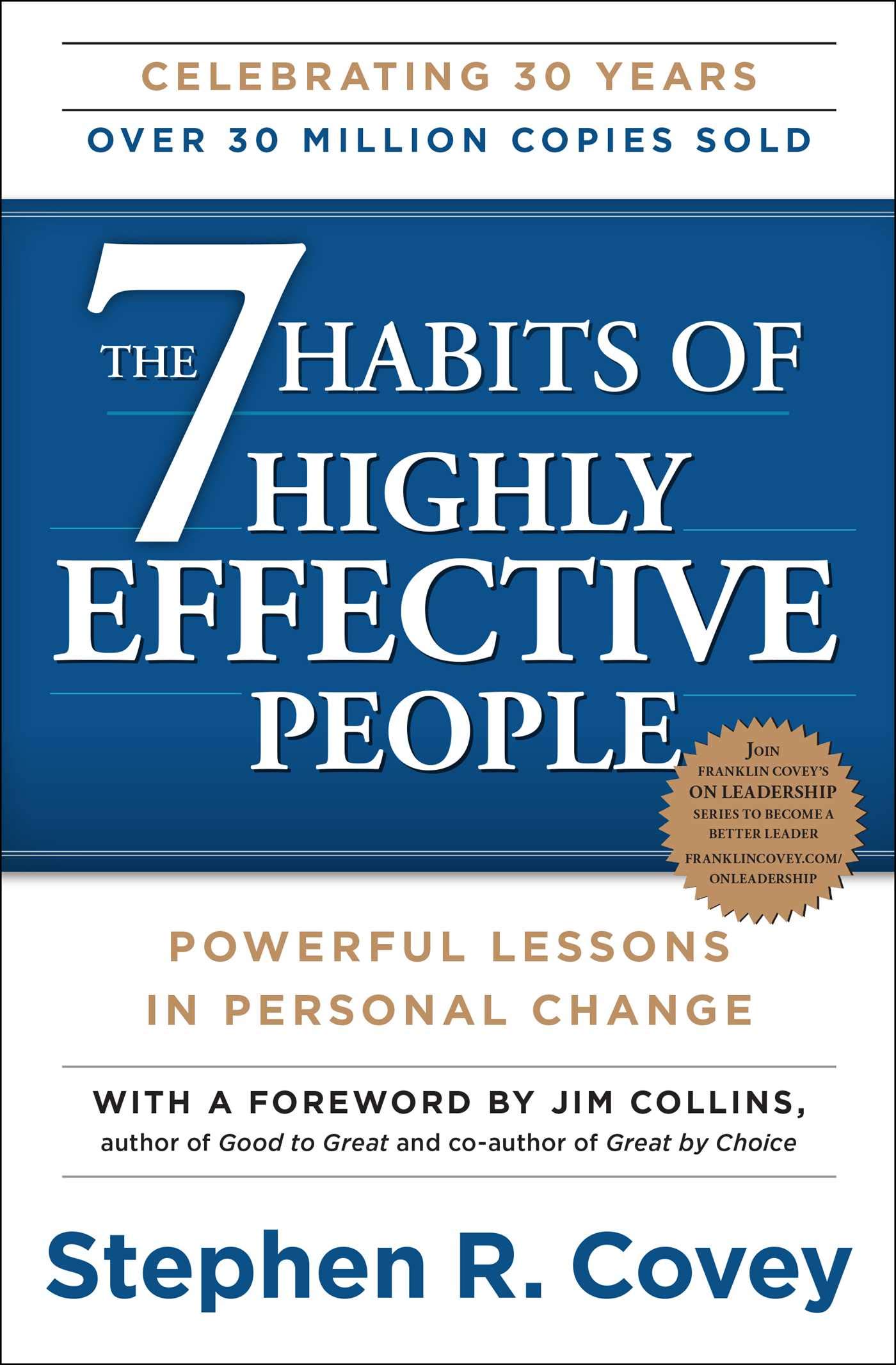
I've never read this book, but may be adding it to my wish list on Audible-because I enjoyed reading the summary. I particularly liked the 3rd habit, putting first things first. The heart of effective time management is to spend the maximum time possible doing important jobs in a non-urgent atmosphere that increases your efficiency. He has 4 quadrants, with quadrant 2 being where we want to concentrate our time the most. This is time spent doing important things on a non-urgent basis. This is doing things like preventative maintenance, relationship building, creative thinking, planning and recreation.
Each of us wears many hats in our professional and personal lives. I'm a father, a husband, an emergency physician, a member of the trauma committee, a minister, a ministering secretary, etc. Since starting this class I have made a list of each of these roles and kept it by my bedside. There are times when I've become too focused on one or two roles, and neglected the others. Suddenly something will come up and it will be a quadrant 1task, done on an emergent basis at the last minute. To try and prevent this, I've begun reviewing this list each night before bed a thinking about what I need to do for each of them. That way, I am more mindful of deadlines and things that need to be done ahead of time.
Another quote I enjoyed from the summary is closely related to habit 3, but actually comes from habit 2, beginning with the end in mind:
I really like this thought. I think it perfectly summarizes something I struggled with in medical school. For a while, I was so sick of studying hour after hour for days, weeks and months at a time that I allowed unimportant things to take precedence over more important tasks. I was elected to student government and allowed those less worthy tasks to take the place of my studying, and my grades dropped because of it. I still passed everything just fine, but rather than earning A's I began getting B's and C's. I hope to not repeat that mistake in other areas of life. I spent way too much time in quadrant 1 because I wasn't making time to accomplish my priorities.
This week I hope to figure out how I can move on beyond the contemplation phase and take actionable steps forward in starting a business.
This week for study we read a summary of Steven Covey's 7 Habits of Highly Effective People.
I've never read this book, but may be adding it to my wish list on Audible-because I enjoyed reading the summary. I particularly liked the 3rd habit, putting first things first. The heart of effective time management is to spend the maximum time possible doing important jobs in a non-urgent atmosphere that increases your efficiency. He has 4 quadrants, with quadrant 2 being where we want to concentrate our time the most. This is time spent doing important things on a non-urgent basis. This is doing things like preventative maintenance, relationship building, creative thinking, planning and recreation.
Each of us wears many hats in our professional and personal lives. I'm a father, a husband, an emergency physician, a member of the trauma committee, a minister, a ministering secretary, etc. Since starting this class I have made a list of each of these roles and kept it by my bedside. There are times when I've become too focused on one or two roles, and neglected the others. Suddenly something will come up and it will be a quadrant 1task, done on an emergent basis at the last minute. To try and prevent this, I've begun reviewing this list each night before bed a thinking about what I need to do for each of them. That way, I am more mindful of deadlines and things that need to be done ahead of time.
Another quote I enjoyed from the summary is closely related to habit 3, but actually comes from habit 2, beginning with the end in mind:
It’s easy to get so caught up in climbing the ladder of success that you fail to make sure the ladder is leaning against the right wall. It’s easy to be busy without being effective, to score many hollow victories at the expense of critical events. We may be very busy, we may even be very efficient, but we will only be truly effective when we begin with an end in mind.
This week I hope to figure out how I can move on beyond the contemplation phase and take actionable steps forward in starting a business.
Tuesday, October 22, 2019
Week 6 - So You Want to Be an Entrepreneur?
This week as I reflected upon the material a story came to mind.
My wife went to Hawaii as a teenager with her family. I've never been. All through medical school we talked about celebrating graduation by going to Hawaii. That time came, and we decided we needed the money to help us move to a new house in Oklahoma for residency. We decided to wait. All through residency when times got tough and we didn't get to see each other as often as we would've liked, we looked forward to going to Hawaii after residency. That time came, and my new job needed me to start the day after I got done with residency. There just wasn't time.
About a year later I decided I needed to make this trip happen. I looked online for tickets and found what I thought was a great deal for airfare. I just wasn't sure I should actually put money down without thinking it through a while longer. A couple of days later I made my decision and went to book the tickets - the price had gone up substantially!
Silently I kicked myself realizing that my lack of decisiveness literally costed me hundreds of dollars. Throughout the readings this week we learned about understanding the industry we'd like to start a business in so that we can recognize opportunities when they come along. I do not want to make the same mistake that I made booking airfare. When I recognize a good deal or a good opportunity, I'm going to jump on it. Of course I'll do my due diligence, but I intend to not lose out on opportunities because of "analysis paralysis", where I'm so busy analyzing that I miss the opportunity altogether. I realize that in a competitive market, speed makes a big difference.
Being an entrepreneur will require just about anyone to get outside their comfort zone. That's part of what makes it challenging and exciting.
Saturday, October 19, 2019
Week 5 - Skill, Character or Luck?
This week we watched a talk the asked 3 critical questions that each entrepreneur should ask themself.
1. Have I contributed something meaningful?
We're often taught the money is the root of all evil. However in Timothy 6:10 the verse states that the love of money is the root of all evil. I view money as a way to bless the lives of others. If you have a lot of money, and you have your priorities straight, having money should mean more free time. That gives you the opportunity to find ways to serve and to contribute in a meaningful way. Many philanthropists contribute money to causes they believe in. Many more people serve in quiet ways without much fanfare. I do think I've contributed to my family's happiness. I'd like to now find ways to contribute to the happiness of my neighbors, ward members and community.
2. Was I a good person?
My goal is to be able to say I treated the people around me with respect and appreciation. In my line of work I often give orders to nurses whose job it is to carry them out. I do try to make a point to thank my nurses for a job well done and look for opportunities to compliment them on their work. The question of whether or not you're a good person is answered in the thousands of small interactions a person has with others each day.
3. Who did I love and who loved me?
This question really helps me focus on what is most important in life. Happiness and joy come through relationships. Your relationship with yourself. Your relationship with God. Your relationship with your spouse and children. I think reflecting on this question helps me remember that while I have to work, I should put my relationships first.
My hope is that by reflecting on these questions from time to time I'll be able to keep my priorities straight. One day I'll be old and reflecting on my life. I hope that I'll be able to answer these questions in a way I can be proud of.
Subscribe to:
Posts (Atom)